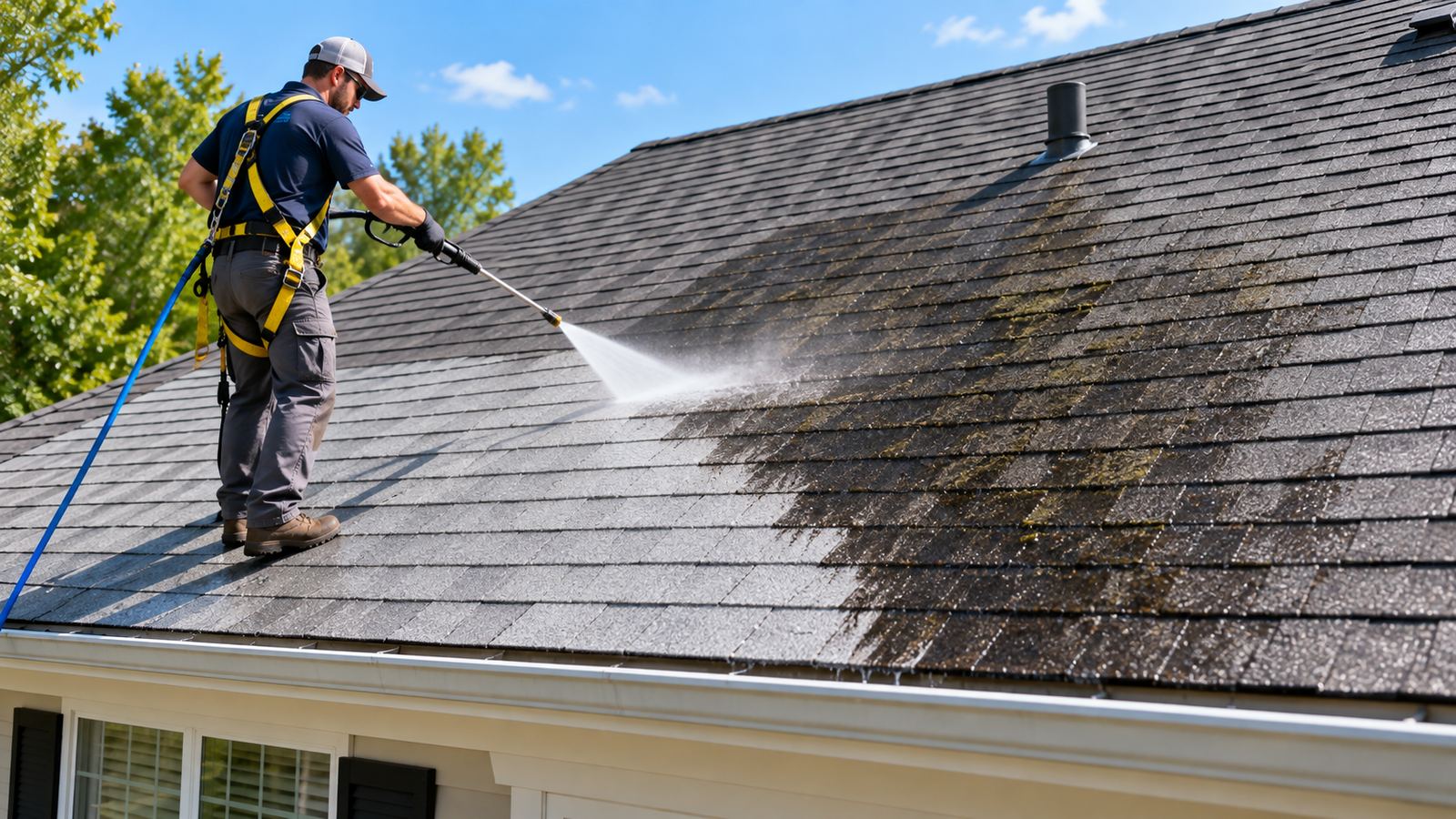
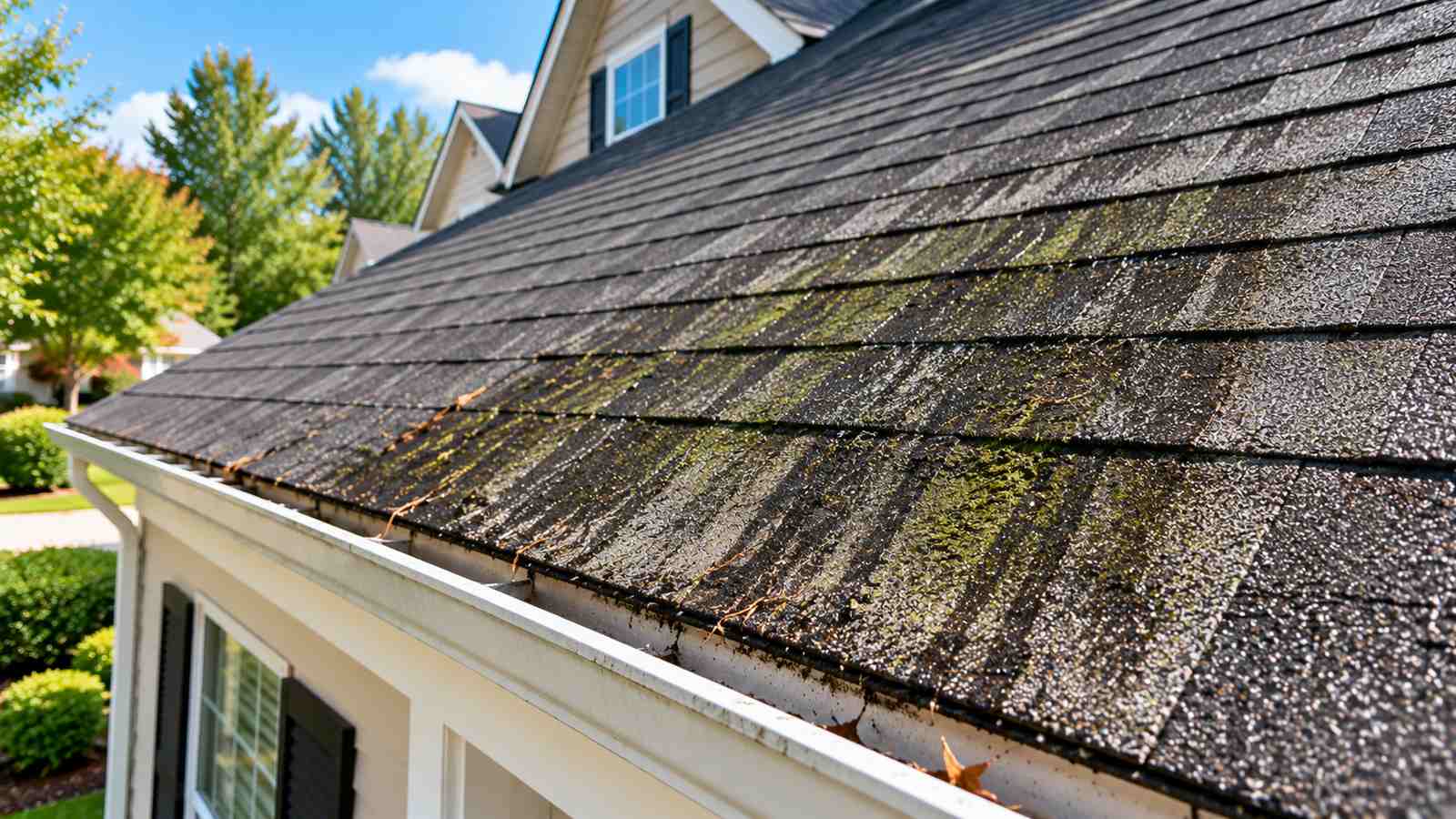
Most people who search for roof pressure washing want the dark streaks gone. We get that. On asphalt shingles the streaks are usually a cyanobacterium called Gloeocapsa magma, which feeds on the limestone filler in the shingle and spreads on the wind, as the Asphalt Roofing Manufacturers Association explains. Tile, flat, and metal roofs grow algae and mildew of their own.
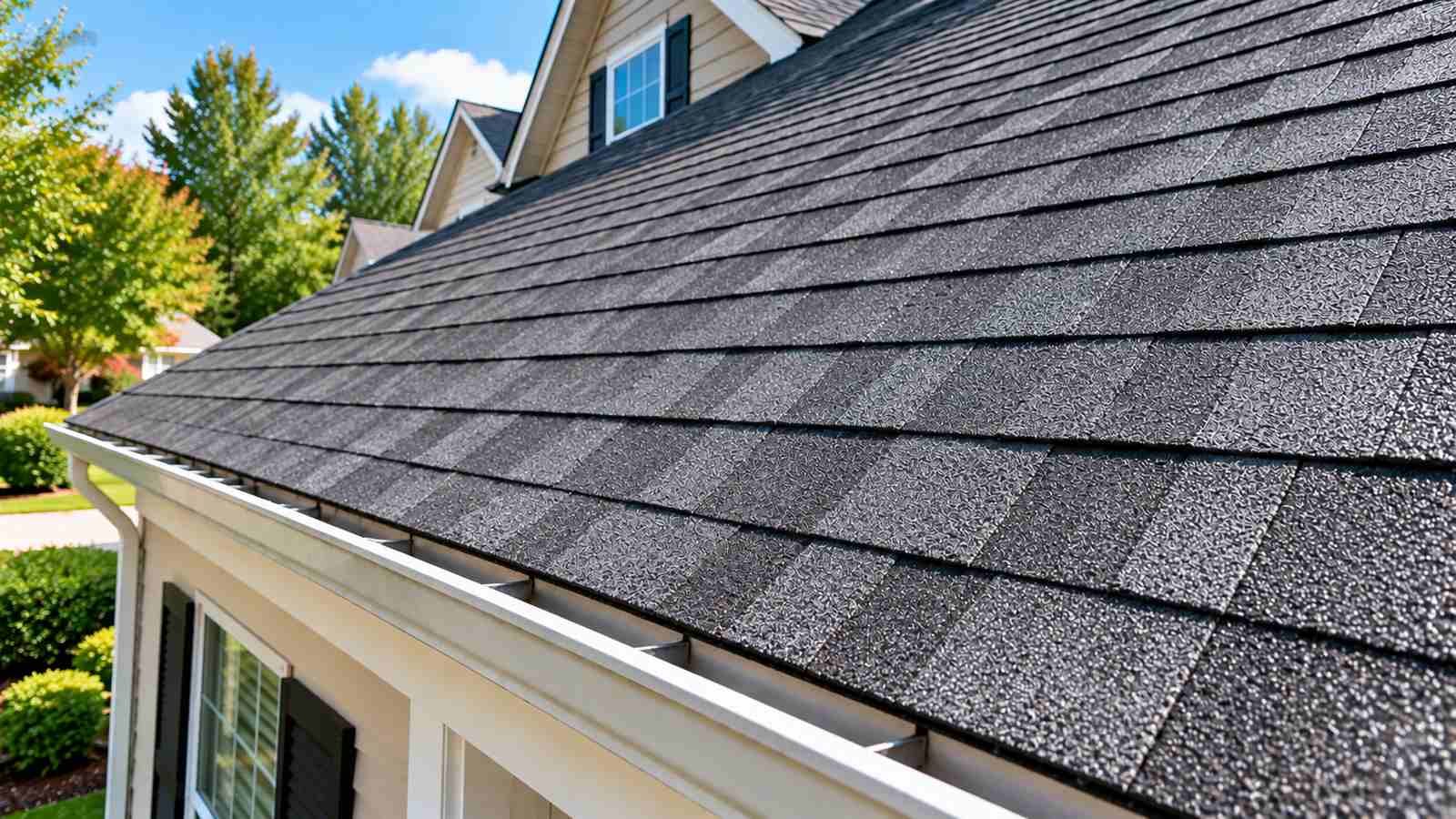
High pressure takes the protective surface off and can push water under the roof. We use a soft wash instead: low pressure, and a roof-safe cleaner that does the actual work.
High-pressure blasting compared with low-pressure soft wash on a roof| On your roof | High-pressure blasting | Our low-pressure soft wash |
|---|
| Shingles | Knocks off protective granules. | Granules stay in place. |
|---|
| Algae and mildew | Roots stay and streaks return sooner. | Cleaner kills growth at its base. |
|---|
| Water intrusion | Can force water under the roof surface. | Gentle flow that follows the way rain runs. |
|---|
| Tile, flat, and metal | Can chip tile and scar coatings and membranes. | Safe on tile, flat roofs, metal, and shingle. |
|---|
Many Coral Gables roofs, especially in the historic districts, are true clay barrel tile or S-tile rather than the concrete tile common elsewhere in Miami-Dade. Clay is more brittle than concrete, so we step only where tiles overlap and keep pressure far below the roughly 1,200 psi ceiling tile care guides set. Newer construction near the University of Miami and in condo buildings is more often concrete tile, shingle, or flat, which we treat the same way we would anywhere else in Miami-Dade.
Roof work in a Coral Gables historic district can fall under the city's Historic Preservation Board review, particularly anything that changes the tile profile or color. We clean roofs. Tile replacement, re-roofing, and any historic review belong to a licensed roofer and the city's process. Coral Gables is also inside Miami-Dade County's High-Velocity Hurricane Zone, so roofing products installed here need a Miami-Dade Notice of Acceptance on top of any historic requirements. Properties near the Biltmore and the Granada Golf Course sit under enough shade that algae tends to return sooner than it does on a roof with more open sky, which is worth factoring into how often a wash makes sense.
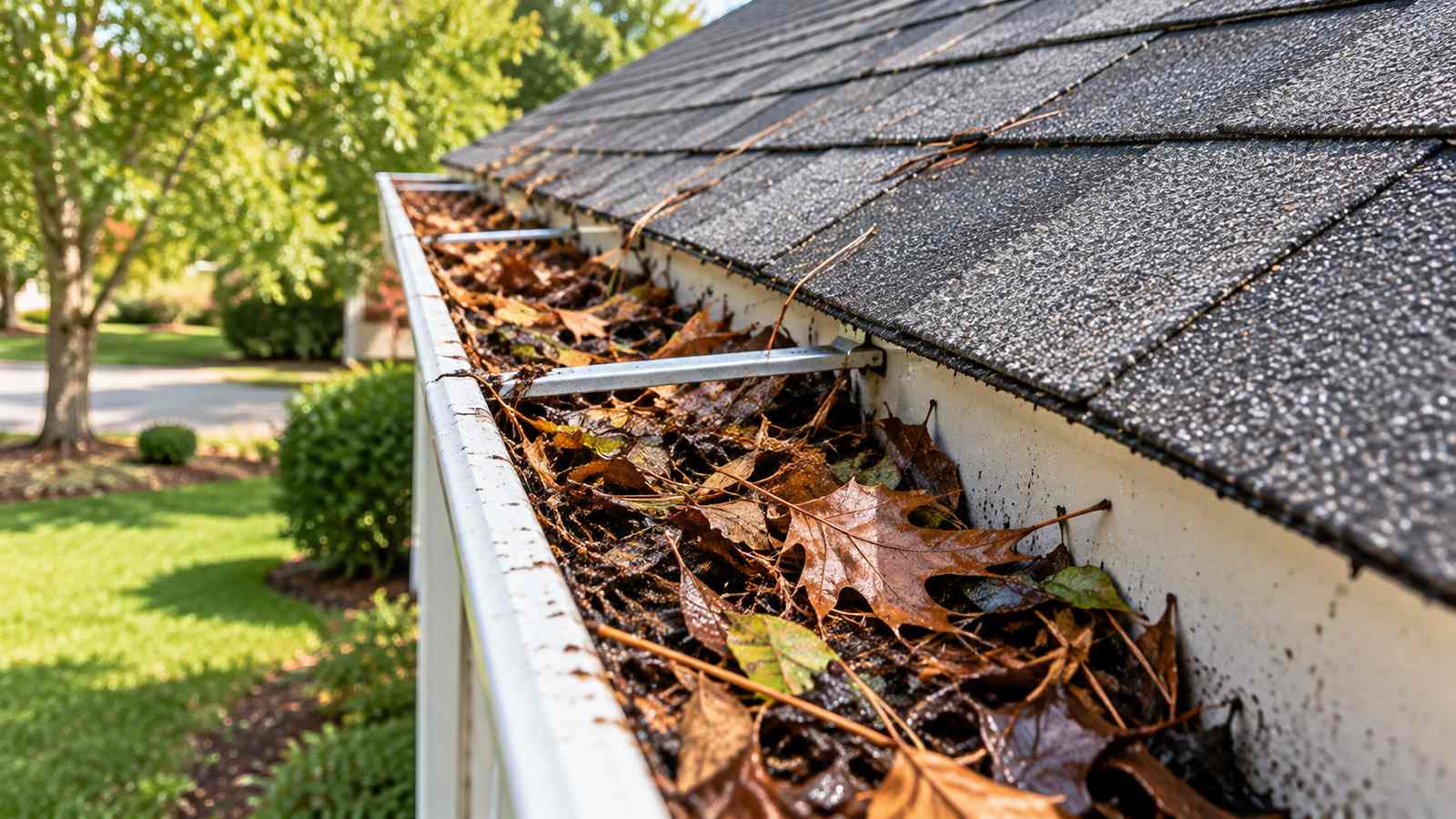
Most roofs do well with a wash every two to three years. Shaded slopes and roofs under trees grow algae faster and may need it sooner. A damp, algae-covered roof also sheds more grit into the gutters below, which is one more reason we handle both in a single visit.
See how our roof washing works in Coral Gables